Understanding Autonomous and Induced Consumption: A Practical Guide for Trend‑Aware Readers
The debate over how households and businesses spend money has long hinged on two key concepts: autonomous and induced consumption. While the terms first appeared in Keynesian economics, they remain crucial for anyone navigating today’s volatile markets or crafting fiscal policy.
Autonomous Consumption: The Baseline Budget
Autonomous consumption represents the portion of spending that persists regardless of income changes—think of it as the “must‑have” budget. A single‑parent household, for instance, will still pay rent, utilities, and groceries even if their paycheck drops. By modeling this baseline, economists can predict how a sudden shock—like a recession or a natural disaster—will affect overall demand.
Real‑World Example: Remote‑Work Start‑Ups
When a tech firm shifts to a fully remote model, its office‑related expenditures drop sharply. That reduction is largely autonomous: the company will cut furniture and building maintenance costs whether or not its revenue rises. Investors watch these cuts to gauge the firm’s resilience, as they signal a firm’s capacity to survive income fluctuations.
Induced Consumption: The Income‑Driven Spike
Induced consumption grows in tandem with income. A higher salary leads to increased discretionary spending—travel, dining out, luxury items—and boosts aggregate demand. Policymakers often use this relationship to design tax cuts: lower marginal tax rates on high earners can spur induced consumption, stimulating growth.
Case Study: Post‑Tax‑Cut Stimulus
After a targeted tax cut, a group of middle‑class families reported a 12% rise in spending on entertainment and home improvements. This induced surge was captured by consumer confidence indices, reinforcing the idea that income elasticity matters more than the size of the initial cash injection.
How to Distinguish Between the Two in Data Analysis
- Baseline vs. Growth Analysis: Track expenditure patterns over time. A sharp, stable outlay that doesn’t vary with income suggests autonomous spending.
- Elasticity Coefficients: Use regression models to calculate the percentage change in consumption per percentage change in income. A coefficient above 1 indicates induced consumption dominates.
- Sectoral Breakdown: Housing and utilities often exhibit high autonomous components, whereas dining, leisure, and luxury goods are more induced.
Implications for Businesses and Policymakers
Understanding the split between autonomous and induced consumption can fine‑tune pricing strategies. Retailers might shift focus to essential goods during downturns, knowing that autonomous demand will sustain sales. Conversely, luxury brands could launch targeted campaigns during boom periods to capture induced spending.
Fiscal Policy in Action
Central banks monitor autonomous consumption as a barometer for real‑time economic health. When autonomous outlays remain robust, a modest fiscal stimulus can effectively trigger induced spending, accelerating recovery without inflating debt excessively. In contrast, a weak autonomous base may signal structural problems that require deeper reforms.
Practical Steps for Trend‑Aware Consumers
- Budget Mapping: Separate your expenses into fixed (rent, insurance) and variable (entertainment, dining). This clarifies how much of your spend is autonomous.
- Track Income Changes: Note how your discretionary spend shifts with each salary increase or bonus. A consistent uptick points to strong induced consumption behavior.
- Use Financial Tools: Many budgeting apps now feature “automatic categorization” that flags autonomous categories. Leverage these to maintain a healthy spending mix.
Conclusion: Harnessing Consumption Dynamics for Smarter Decisions
Distinguishing autonomous from induced consumption equips businesses, policymakers, and consumers with a clearer view of economic forces at play. By aligning strategies with these dynamics—whether it’s adjusting pricing, tailoring tax incentives, or refining personal budgets—stakeholders can navigate uncertainty with confidence and drive sustainable growth.
Delta V Interactive Calculator | Rocket Equation | FIRGELLI
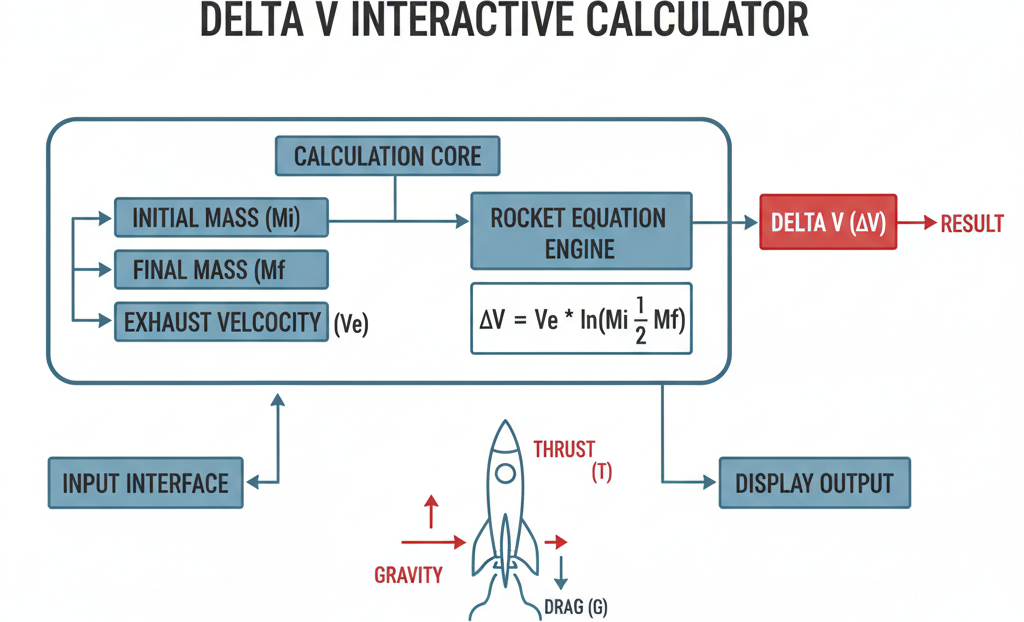
Delta V Interactive Calculator | Rocket Equation | FIRGELLI